Scientist of the Day - Nicolaas Witsen

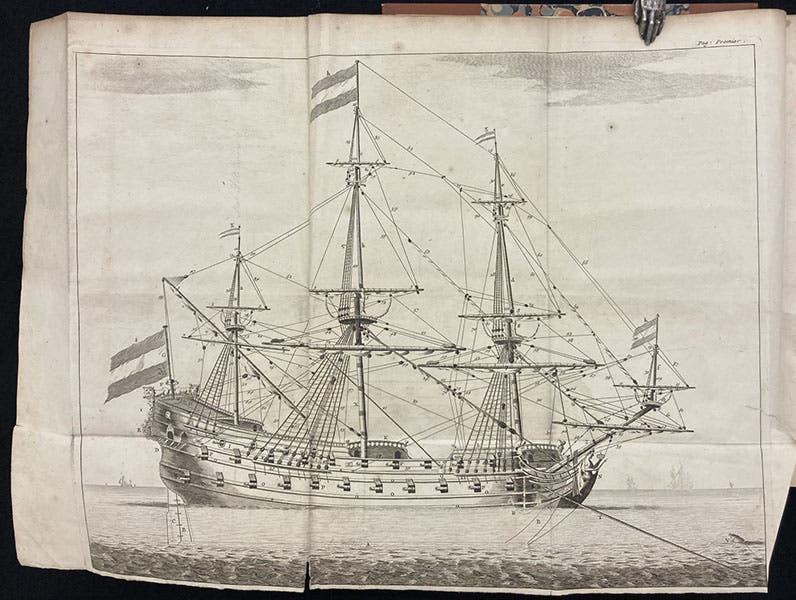
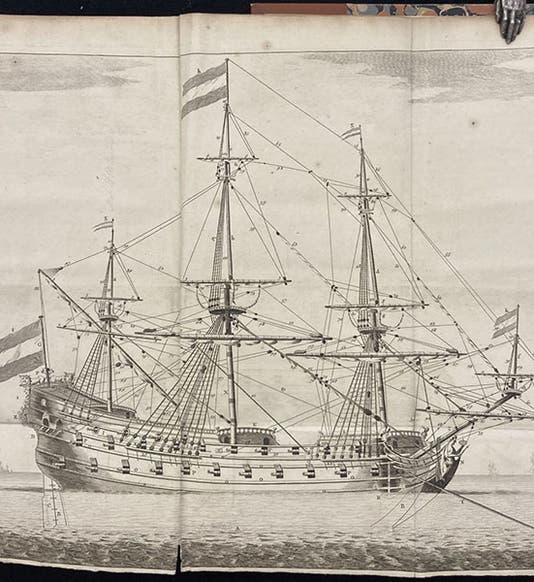
A ship of war, with every gun and block identified, engraved frontispiece, L'art de batir les vaisseaux, by Nicolaas Witsen et al, 1719 (Linda Hall Library)
Nicolaas Witsen (often Nicolaes), a Dutch ship-builder, collector, map-maker, administrator of the Dutch East India Company (the VOC), and thirteen-times mayor of Amsterdam, was born on May 8, 1641, and lived until 1717. We wrote a general notice about Witsen 7 years ago, in which we showed the map of Russia that he published in 1687 (which we do not own) and several papers on volcanos that he published in the Philosophical Transactions of the Royal Society (which we do own). We also mentioned that we had in our collections a book by Witsen on ship-building, but did not comment further upon it.
_-_SK-A-5016_-_Rijksmuseum.jpg#/media/File:Michiel_van_Musscher_-_Portret_van_Nicolaes_Witsen_(1641-1717)_-_SK-A-5016_-_Rijksmuseum.jpg)
Portrait of Nicolaas Witsen, oil on canvas, by Michiel van Musscher, 1688, Rijksmuseum, Amsterdam (Wikimedia commons)
Today we show you some plates from that book, which are magnificent. His original book on ship-building was published in Dutch in 1671; we do not have a copy of that. But a French edition with the title L'art de batir les vaisseaux was published in 1719. It is not clear how much of this book is Witsen's, since he is one of several authors listed, but since he is first author, we will assume the bulk of it, and especially the plates, was taken from his Dutch treatise.

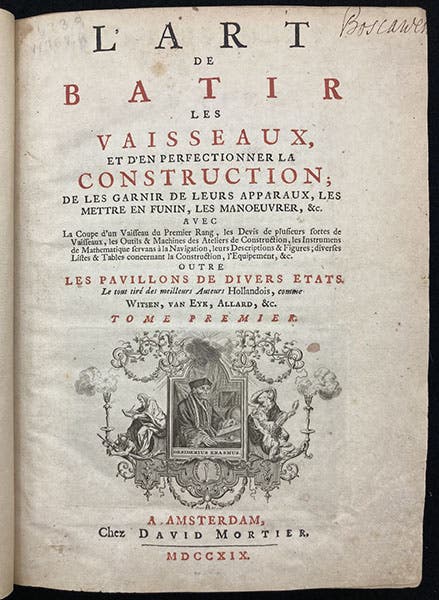
Title page, L'art de batir les vaisseaux, by Nicolaas Witsen et al, 1719 (Linda Hall Library)

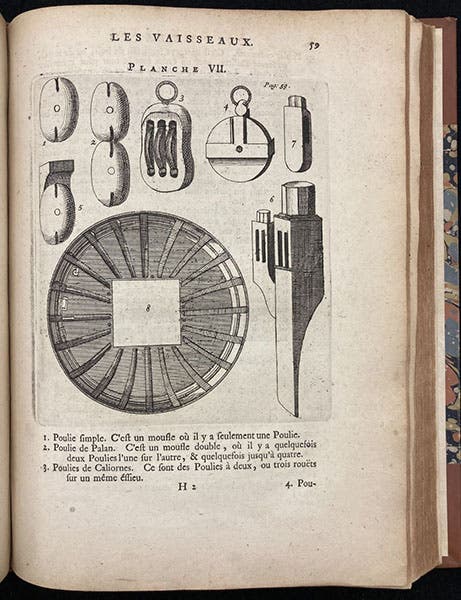
Rigging blocks, engraving, L'art de batir les vaisseaux, by Nicolaas Witsen et al, p. 53, 1719 (Linda Hall Library)
Our first image here is also the book’s first image, a magnificent folding frontispiece that shows every gun and element of rigging on a VOC ship. I was struck by the fact that every pulley-block in the rigging is depicted in solid black, as if to make them stand out, and demonstrate how many were required in a man-of-war. There are even separate plates that show these blocks close-up. Manufacturing rigging blocks was a major expense in building a ship powered by sails (see our post on Henry Maudslay for a later century’s take on his problem).

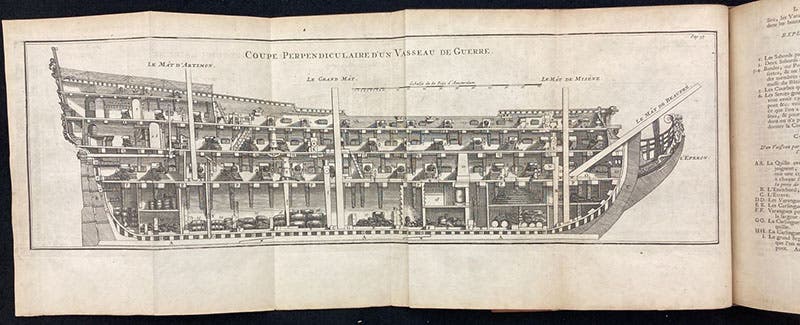
Longitudinal section of a ship of war, showing cannon placement, folding engraving, L'art de batir les vaisseaux, by Nicolaas Witsen et al, p. 37, 1719 (Linda Hall Library)
Another large folding plate is a longitudinal section of a warship, showing an array of cannons arranged on three decks, of which we also show a detail (fifth and sixth images). Can you imagine what it sounded like amidships when those guns fired, and what the air must have been like? It is hard to fathom.

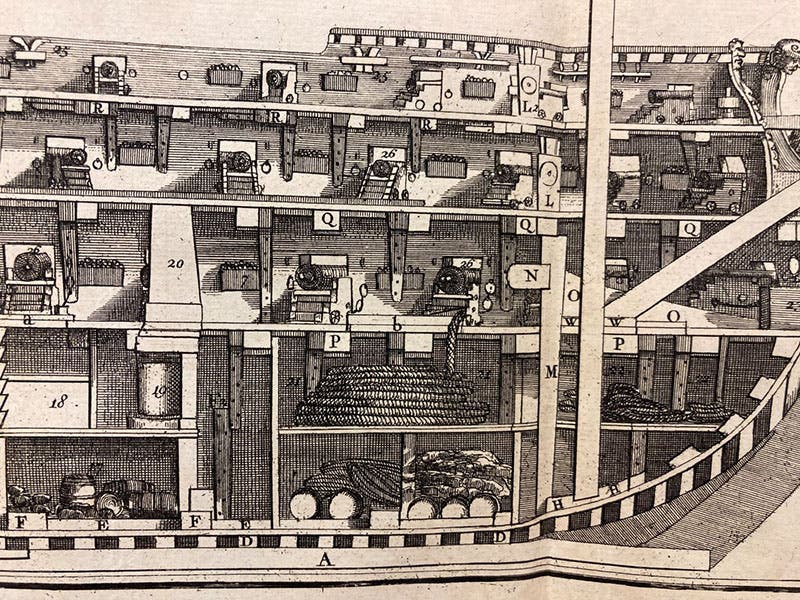
Detail of fifth image, cannon placement, folding engraving, L'art de batir les vaisseaux, by Nicolaas Witsen et al, p. 37, 1719 (Linda Hall Library)
There are two plates that show the process of "careening", where a ship was winched over onto its side on a beach at low tide, so that the hull could be cleaned of seaweed and other growth that sapped it of speed. We show one of the careening plates, as well as a detail (seventh and eighth images). If that looks like a fire hose and pump that is being used to clean the bottom, perhaps that is because the fire hose was invented in the 1670s in Amsterdam by Jan van der Hayden, a moonlighting painter who deserves a post of his own someday.

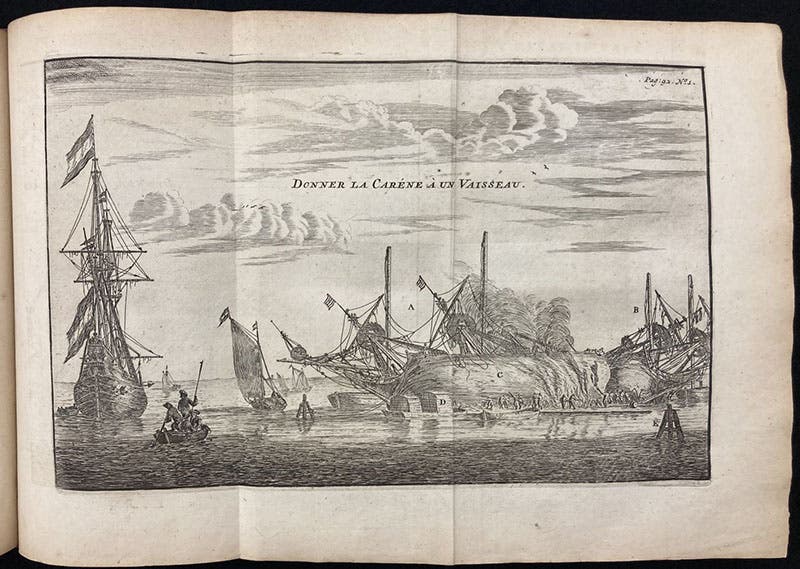
Careening a ship, engraving, L'art de batir les vaisseaux, by Nicolaas Witsen et al, p. 92, 1719 (Linda Hall Library)

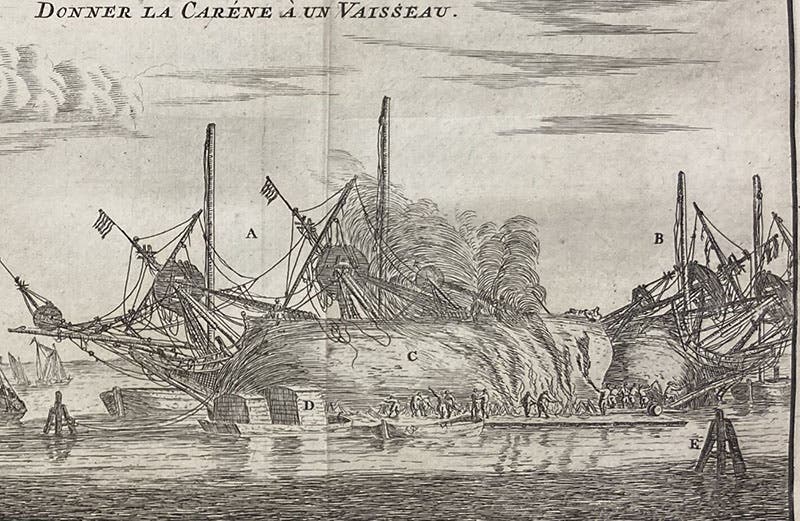
Detail of seventh image, careening a ship, engraving, L'art de batir les vaisseaux, by Nicolaas Witsen et al, p. 92, 1719 (Linda Hall Library)
The first edition of Witsen's ship-building book came to the attention of Tsar Peter the Great of Russia, who was trying to modernize the Russian navy. Peter came to Amsterdam and spent some months working incognito in the Amsterdam shipyards, and getting to know Witsen quite well. Peter was in fact present when Witsen died, on Aug. 10, 1717. Witsen was buried in Egmond aan den Hoef, where he had his summer home. The site of his grave is not known.
William B. Ashworth, Jr., Consultant for the History of Science, Linda Hall Library and Associate Professor emeritus, Department of History, University of Missouri-Kansas City. Comments or corrections are welcome; please direct to ashworthw@umkc.edu.