Scientist of the Day - Robert J. Mackey, Jr. and Arthur B. Crawford

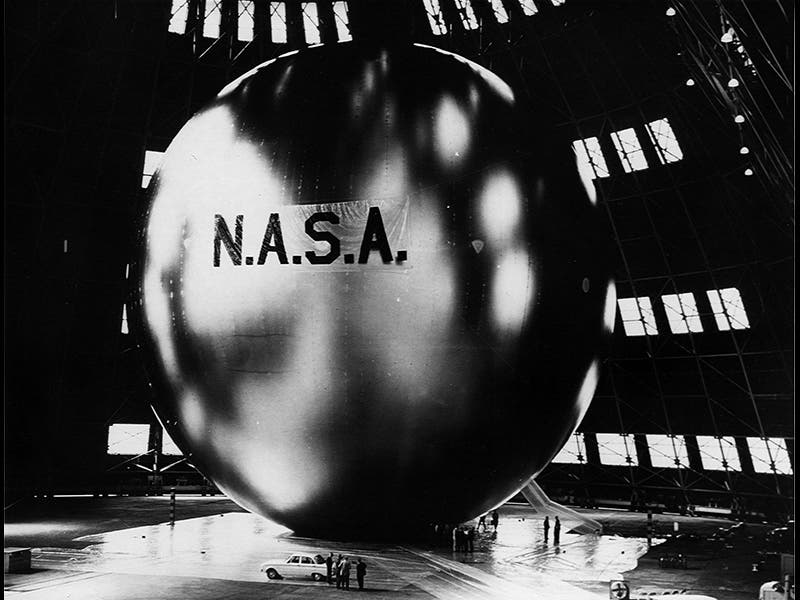
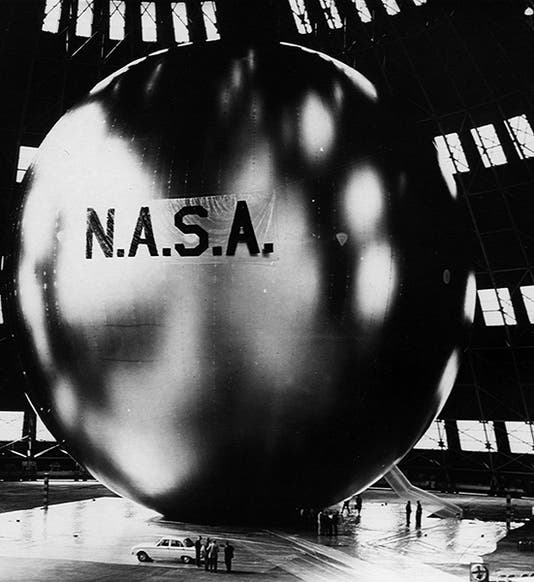
Echo 1, the world's first communication satellite, was launched Aug. 12, 1960. Echo 1 was a passive satellite, meaning it did not receive, amplify, and transmit signals electronically, it merely reflected them. It could do so because it was a giant ball of highly reflective material, inflated with gas after it went into orbit. We have a photograph of it being tested in a hangar, dwarfing the people and cars around it (see first image above).

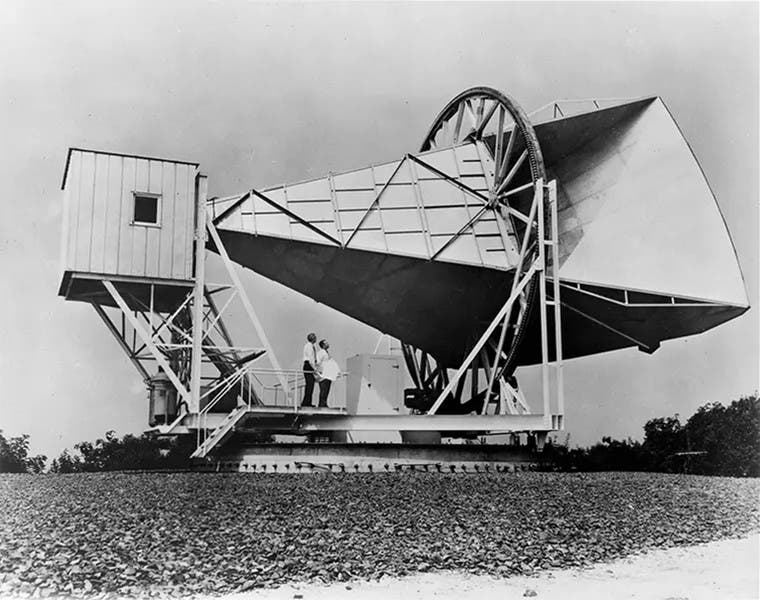
In order to use the satellite in orbit, specialized transmitters and receivers were needed, and one was built just for this purpose in 1959, in Holmdel, New Jersey, by Bell Labs (second image). The antenna would become famous for a different reason, when, 1n 1964, Arno Penzias and Robert Wilson used it to discover the cosmic background radiation, which would earn them both Nobel prizes.

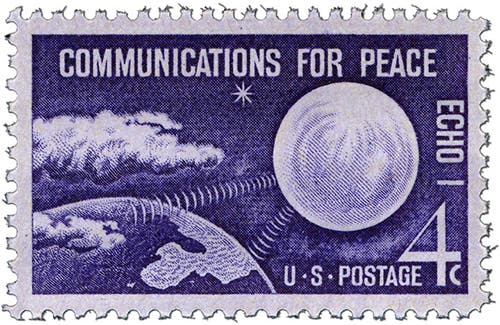
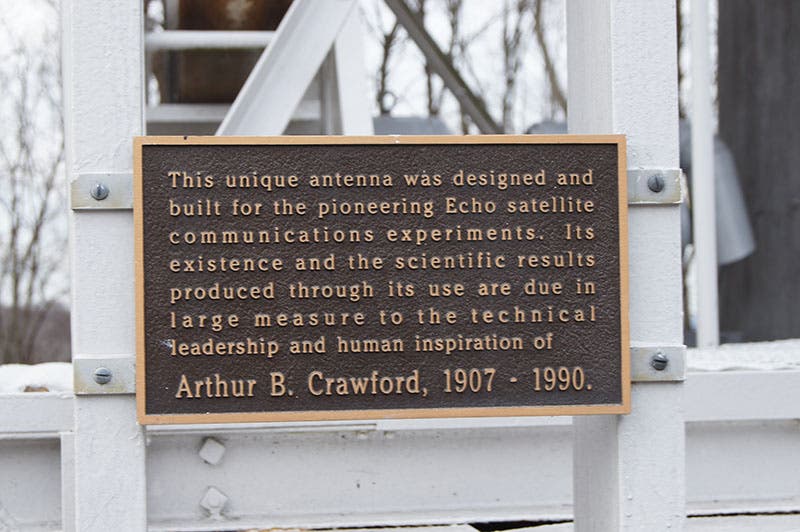
In most accounts of the Echo Project or the Holmdel antenna, no mention is made of the Echo project manager, Robert Mackey, or the designer of the Holmdel antenna, Arthur B. Crawford, so we honor them today. Echo 1 was rewarded with a postage stamp in 1960 (third image), but Mackey wasn't credited there. Crawford, however, does have a plaque attached to the Holmdel antenna, to remind visitors what it was built for (fourth image), and who built it.