Green Reads: Farming While Black
“Racism is built into the DNA of the US food system. Beginning with the genocidal land theft from indigenous people, continuing with the kidnapping of our ancestors… for forced agricultural labor, morphing into convict leasing, expanding to the migrant guestworker program, and maturing into its current state where farm management is among the whitest professions, farm labor is predominately Brown and exploited, and people of color disproportionately live in food apartheid… this system is built on stolen land and stolen labor.”
- Leah Penniman, Farming While Black
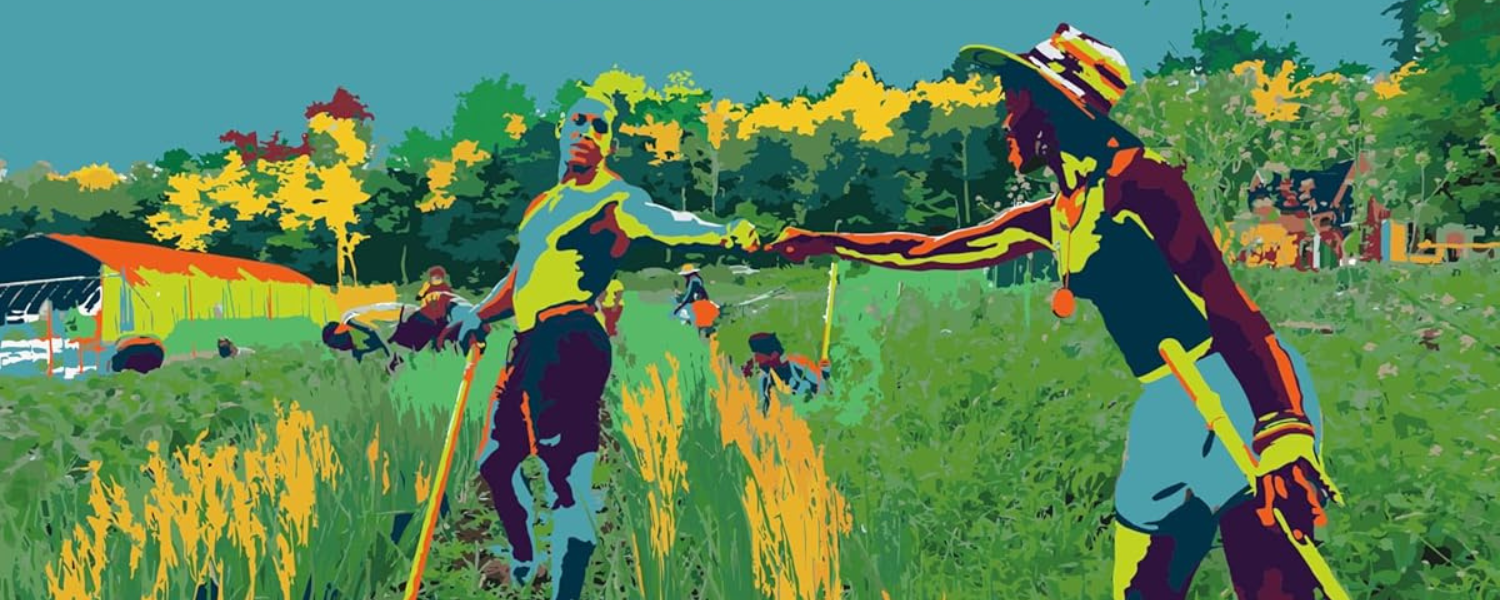
Farming While Black: Soul Fire Farm’s Practical Guide to Liberation on the Land by Leah Penniman provides, as the title suggests, a thorough step-by-step guide on how to start, manage, and keep a farm, down to the tiniest detail. This includes how to get funding, the tools you’ll need, where to source them, how to plant crops, market, and distribute them locally. Centering justice, liberation, and community healing, Penniman provides outlines to a youth program curriculum, tips on how to form a co-op, advice on advocating for policy change, and encouragement to engage in activism. Created to provide fresh food to disenfranchised people living in what is described as “food apartheid”, Soul Fire Farm now feeds “95 families and 350 individuals”. Highlighting the struggles and successes of this process, Farming While Black functions as an ample textbook on everything you need to know about farming while remaining rooted in its goal for the self-determination of black, brown, and indigenous peoples.
Soul Fire Farm relies almost entirely on the knowledge of African and Caribbean elders, ancestors, traditions, and modern methods. Pulling first from Haitian Peasant Movement’s mode of soil restoration, then the terracing technique, “fanya-juu”, found in Kenya, down to the irrigation systems of Ancient Egypt, Penniman’s travels and time under the tutelage of farmers abroad informs the sustainable and humane practices of the farm. Similarly, Soul Fire used the local neighborhood susu, “a microfinance strategy thought to have originated in Nigeria and spread to Ghana in the early 20th century”, to gain its initial funding. Highlighted also are black innovators like the farmer Joseph Smith who invented the lawn sprinkler, Dr. Booker T. Whatley who was one of the creators of Community-Supported Agriculture (CSA), and Fannie Lou Hamer who founded the 1972 Freedom Farm.
Farming While Black acknowledges the history that informs the apprehension of the Black community to engage in agricultural labor. Readers witness the way Soul Fire Farm incorporates customs that repair the fraught relationships many may have with working the land. This is exemplified most namely in a practice picked up in Ghana and originating in Trinidad of dancing on dried rice plants to harvest their seeds. In this way, Penniman deftly decouples farmwork from the trauma of slavery and contextualizes African-Diasporic connections to the land as a joyful co-laboring with the earth to produce life, health, and community.
What we can do: As outlined in Farming While Black
The “Three Cooking Stone Approach” of the Civil Rights Movement
- “Maintained institutions (farms) to offer material support to their communities”
- “Engaged in system reform (voting and petitions)”
- “Led civil disobedience (marches and sit-ins)”
Northeast Farmers of Color Policy Demands
- “Real Food for Our People”
- “Dignity for Farm Workers”
- “Community-Based Farmer Training”
- “Economic Viability for Farmers”
- “Reparations for Stolen Land and Wealth”
The Three Characteristics of True Reparations
- “Nothing about us, without us: Black people get to define what reparations look like.”
- “No strings attached: Transfers of land and resources without oversight or conditionality.”
- “The whole pie: give the land, money, and jobs away even and especially when it entails personal sacrifice.”
More recommended reading on the subject
- The Elsewhere is Black: Ecological Violence & Improvised Life by Marisa Solomon
- Undrowned: Black Feminist Lessons from Marine Mammals by Alexis Pauline Gumbs
- There’s Something in the Water: Environmental Racism in Indigenous & Black Communities by Ingrid R. G. Waldron
- George Washington Carver in His Own Words edited by Gary R. Kremer
- All We Can Save: Truth, Courage, and Solutions for the Climate Crisis edited by Ayana Elizabeth Johnson & Katharine K. Wilkinson